Sunday, September 29, 2024

The Cost of Ballot Box Ignorance

Listening to the Journal podcast on Spotify, I was reminded of our discussion of (un)informed voters last week. The commentators were discussing the difference in support for economic policy initiatives between American voters and economists.

Economists are surely more educated on the effects of economic policy than the average voter. If we assume the political makeup of economists does not differ from that of the general public, we could use the discrepancy between their support as a proxy for voters’ level of awareness. The difference in support of some policies was striking; whereas 100% of economists opposed putting a 20% tariff on all imported goods, nearly half (47%) of voters supported the tariff. The podcast highlighted how voters can oversimplify their decision calculus, liking the idea of supporting American jobs and “making another country pay”. In reality, companies, rather than whole countries, are the ones that face import tariffs, and they then pass these additional input costs onto consumers, raising prices.


If everyone participates in a democratic system, it helps ensure that the candidate that best represents group interests is elected. To best contribute to this public good, however, voters can make sure their decisions are informed, either by educating themselves on the issue at hand, or, if their opportunity cost is too high, remaining ignorant and relying on expert’s guidance.


Thursday, September 26, 2024

To Infinity and… Eh, Maybe Later

Funding for space exploration peaked in the 1960s and has tapered off in decades since. This can be explained by the concept of rational ignorance.

Tied to the fight against Communism, the space program of the 1960s was largely politically motivated. In 1964, it accounted for a staggering 4.31% of the federal budget. At the time, the marginal benefit of continued space exploration was extremely high, as the frontier of space was inextricably linked with Cold War prestige and national security. However, after the Moon landing, the sense of accomplishment diminished the drive for continued space exploration, shifting the marginal benefit curve to the left.

At the same time, marginal costs began to rise. Starting in the 1970s, research and development funding in the U.S. grew rapidly, with competing priorities like health and national defense absorbing more federal resources. This increase in opportunity costs led to a decline in space exploration as a share of federal funding, dropping to current levels of 0.5-1% of the budget. The rise in opportunity costs caused a leftward shift of the marginal cost curve.

The fall in marginal benefits and the rise in marginal costs shifted the level of optimal ignorance about space. At present, it is rational for the United States to remain relatively ignorant about space until there is a shift of the equilibrium that favors increased knowledge.


Monday, September 23, 2024

Prisoners on the Roads

  In class we talked about the prisoner’s dilemma, and how it achieves a completely undesirable Pareto-inefficient outcome by way of a dominant strategy. After our class, I had around an hour to go back to my apartment and make lunch before heading back out to my next class. I had decided to drive that morning, so I got in my car and quickly took off, hoping to efficiently allocate my time. Instead,  I found myself in bumper to bumper traffic for the next 20 minutes. What could have easily been a 15 minute stroll on a beautiful day turned into 20 minutes of me angrily glaring at the rearview mirror, wishing I had just walked.

Everyone on the roads wants to arrive at their destination as soon as possible, and since driving is faster than walking, the dominant strategy for everyone is to drive. However when enough people choose the dominant strategy and drive, a Pareto-inefficiency is created where any one driver could improve everyone’s utility by choosing to walk.

Sunday, September 22, 2024

Running Models

Last week as we discussed models, I was reminded of the models used in equating running performances. 

I recently ran my first marathon, and as the race approached, I encountered an issue: How should I pace a distance I had never run before? I had no idea.

Marathon equivalency calculators attempt to predict race time by taking into account a previous race time and applying a formula (most often the Riegel formula). These calculators simplify the calculus, ignoring factors that can contribute significantly to running time-- elevation, slope grade, terrain, temperature-- as well as less obvious factors such an athlete's sleep or fueling. Like running models, economic models frequently rely on historical data to make predictions about the future or examine an issue on a smaller scale and then extrapolate to a larger one. Just as it would be detrimental to race a marathon during training just to learn your race pace, it is often unfeasible to measure economic effects on a macro scale. Instead, economists may focus on individual localities and then extrapolate. In both situations, the model acts as a tool rather than any guarantee, and it is expected that the real world will deviate from prediction when inherently unpredictable outside factors take effect. 


Dad Rock, Fishing Licenses, and Tires: Is the James River Really a Public Good?

The Upper James River appears to satisfy the two characteristics of a public good. There are 12 public access ramps along the 63-mile stretch, which are free to use for the public, making it non-excludable. Combined with free access, the length and size of the river make it non-rivalrous to an extent. Since the river is not infinite in size, it is possible for it to become too crowded. Take, for example, someone nearby is playing dad rock from two massive speakers strapped to their kayak, and you just despise dad rock. If the river was crowded and you couldn't get far away, their addition to the river diminishes your utility gained by the river. However, I would argue that this is a rare occurrence, and unless you hop on the river during a major holiday, I would say it functions as a public good.

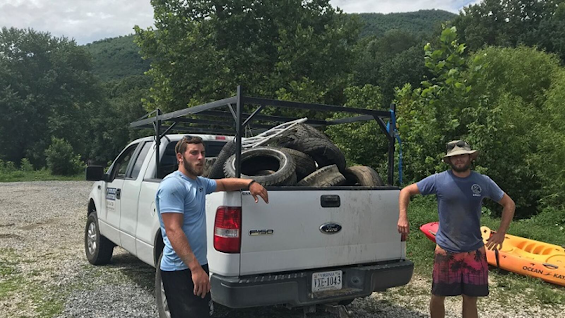
Perhaps the largest threat to the non-rivalrous aspect of the river is pollution. For many years, the river has been used as a cost-efficient avenue to get rid of trash and other waste. The negative externalities caused by these actions are obvious - one example of this is the surprisingly large number of tires dumped into the James, which affect water quality and the aesthetics of the river. While there are government regulations against such action, they still happen, and most conservation efforts are headed by local businesses and volunteers (like Twin River Outfitters, who everyone should check out).

Two of my coworkers, Jack and Isaac (left to right) after a successful river cleanup

If you like to fish, then you will be sad to find that there are measures in place to make the classic pastime excludable. In order to fish on the James, you must have a valid fishing license and abide by state regulations set in place by the Virginia DWR. A few years ago, the local Botetourt County community was in an uproar over a proposed boating access and permit fee. If approved, this daily $4 fee would have introduced a barrier to entry to river access and made the river excludable, threatening the sanctity of the James as well as local business operations (thankfully the decision was overturned).

Overall, the James River survives as a public good through local and state government maintenance and regulation, but I argue it is mainly due to the altruistic actions of the local community. 

A Not-So-La-La Land Industry

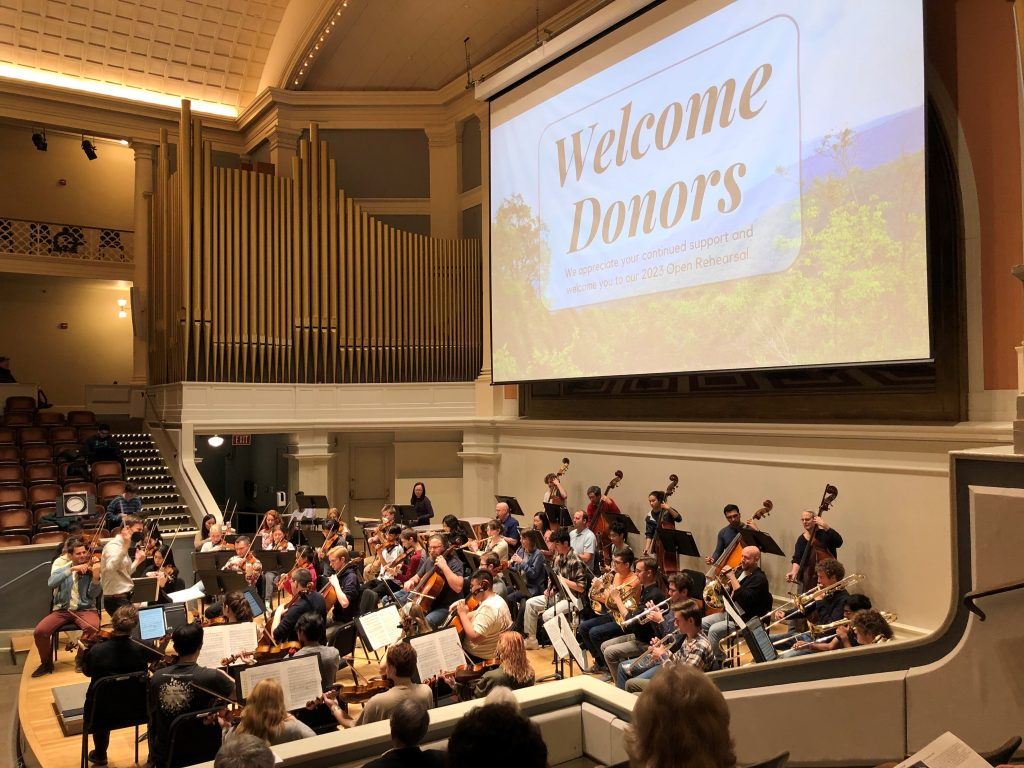
I play bass in the Charlottesville Symphony at UVA, along with peers, music faculty, and community members. There is also the Charlottesville Symphony Society, a non-profit that aims to raise donations for the Symphony and its professionals. In the 2022-2023 season, about 2/3 of total revenue came from donations versus 1/3 ticket sales. However, there was also a deficit of $195,007.


Orchestras face challenges of waning public interest, decreased funding, and high fixed costs. One alternative is to make orchestra concerts like a public good. Multiple people can enjoy the music (non-rival). Many European governments fund orchestras and make tickets more affordable (non-excludability). But this is only efficient if the sum of marginal valuations to consumers is at least the marginal cost of providing orchestra concerts.


That is likely not the case here. It would be a Pareto inefficient outcome if the University funded the orchestra and its professionals. Employees' wages would be redistributed, tuition would be raised upon students, and the orchestra would be a stagnant monopoly. Under the non-profit structure, orchestras act like competitive firms and strategize to increase demand and extract consumer surplus, mainly from donors.


Pops concerts, competitive concerts (two orchestras play in the same concert), and subscriptions can boost demand. There's potential future demand as baby boomers factor in art and entertainment venues for their retirement plans. Moreover, the Symphony Society connects meaningfully with their donors and offers special benefits. Opening receptions, complimentary tickets, VIP parking, dinners, etc. These incentives seem to work as donations increase.


For Frank Lloyd Wright's sake!

Gruber presents good landscaping as an example of a positive consumption externality --- neighbors of the home derive utility from well-kept land despite not paying for it. But what if the home or yard is ugly?

I am from Oak Park, Illinois, home of architect Frank Lloyd Wright. Despite not living in a Wright home, I live in the FLW historic district, which has certain guidelines for proposed projects on historic property. Some examples include retaining historic window trimming, siding, and roofing.

One could imagine pretentious Oak Parkers demanding compensation if a neighbor deviates from the Wright style. But with these specific regulations, Oak Park turned to collective action for this negative consumption externality to keep homes' values high. And with 95% of proposals quickly approved, there's evidence that Oak Parkers take pride in their architecture and restoring its historic qualities.


License Plate in China- a new private good

A few years before I was born(I was born in 2003), my parents purchased their first car. At that time cars were still scarce- you could rarely see privately owned cars on the street, mainly buses and bicycles. Undoubtedly, license plates to cars were like ketchup to fries: if you buy the fries, you get the ketchup. Who would have thought that 20 years later, car plates are even more scarce than cars, that even if you buy a car, you are not guaranteed to get a plate?

License plates used to be more like a public good-  it is non-rival and non-excludable. One person getting a plate doesn't limit others from getting one, and no one can exclude other people from getting a plate. Even though technically if a person specifies his plate numbers but this combination is already taken, he/she wouldn't be able to get that specific plate. But overall, plate falls into the category of public good rather than private goods. Ever since the lottery system was released, plates have become a private good-both rivalrous and excludable. Policies differ depending on the cities, but in general, it is hard to get a plate, even if you already have a car, and especially if you already own a plate.

However, an exception holds. To respond to the negative externalities, the acceptance rate to the lottery system is significantly higher if the car you buy is electric. Some cities have the policy that if you buy electric cars, you can automatically get a plate without participating in the lottery system. The logistics behind this policy seems to be straightforward-  gas-powered cars pose negative externalities on the society, such as pollution, but individual drivers don't bear the full cost of it. Therefore, the government is encouraging consumers to switch to a less polluting option.

My takeaway on this public policy is that, by shifting plates into being a private good, the government is trying to correct the negative externalities, and it is working at least to some extent. There's less pollution from what I can see. Also, I am glad that I still don't have a license so that I don't need to compete for this rivalrous and excludable good.

Mutually Assured Destruction: a prisoner's dilemma

In the Cold War era, the United States and the Soviet Union were locked in a cycle of escalating arms production following the development of nuclear weapons. This situation presents a classic prisoner's dilemma. The dominant strategy of either country was to increase stockpiles to maintain a position of deterrence, leading to a pareto-inefficient equilibrium that trapped both countries and heightened the risk of global nuclear annihilation. 

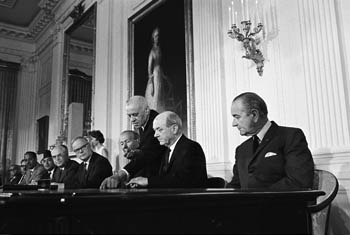
There were two options for a pareto-efficient equilibrium: first, complete destruction of all nuclear weaponry; second, significant reduction of nuclear weaponry. As it is impossible to “close Pandora’s box,” the first option is unrealistic. However, the Nuclear Proliferation Treaty of 1968 represented a pareto-efficient move. It institutionalized an effort for disarmament and represents the situation in which all parties commit to contribute to the common good. 

Nuclear Non-Proliferation Treaty (NPT) - Nuclear Museum

The issue with the NPT is its lack of a single, powerful enforcement mechanism. No “crazy cousin Jeff” will come to break the knees of a country that doesn’t contribute. This presents a secondary prisoner’s dilemma: to honor the treaty or defect. Smaller enforcement mechanisms such as the UN Security Council and diplomatic pressure exist, but compliance is never guaranteed.

Thursday, September 19, 2024

The London Underground: A Public Good or Public Monopoly?

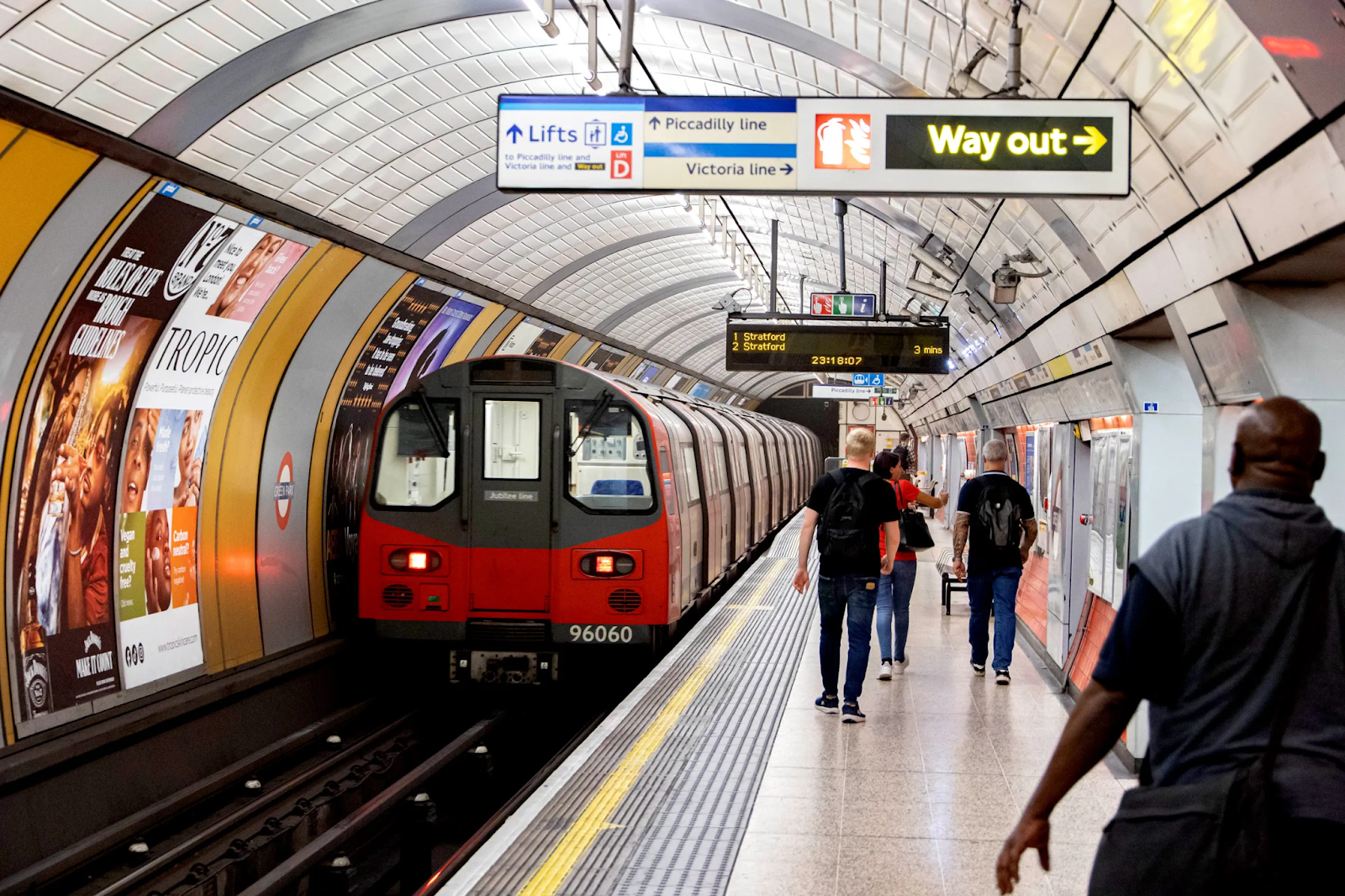
    The London Underground, better known as the “Tube,” is a mass transportation system that connects 272 train stations in the greater London area and provides an essential public service. This public transportation system may seem like a public good due to its widespread societal benefit and support through public funding, but does it meet the criteria? By definition, a public good must be non-rivalrous and non-excludable. As explained by Paul Samuelson, a public good is “[a good] which all enjoy in common in the sense that each individual’s consumption of such a good leads to no subtractions from any other individual’s consumption of that good” (Samuelson 1954: 387). Given that there is a limited amount of space on the Tube and that one must pay a fare to ride, it is both rivalrous and excludable. Therefore, if the Tube is not a public good, what is it?

    I would argue that the Tube is a public sector natural monopoly. This is because it is operated by Transport for London (TfL), which, as a government entity, has exclusive control over London’s underground transit system. Due to the high fixed costs required in constructing and maintaining this infrastructure, it would be impractical or inefficient for multiple firms to compete. Through state regulation of this natural monopoly, the government can prevent the exploitation of monopoly power, promote universal access, coordinate long-term planning and investment, as well as improve efficiency. The goal of this, much similar to providing a public good, is to reach the allocative efficient outcome that maximizes the total social benefit. Overall, the Tube is not a public good, but rather a service provided by a public sector natural monopoly.


(Photograph: Nicolas Economou/Getty Images)


Works Cited

Fowler, J. and Gillett, A. (2021), "Making a hybrid out of a crisis: historical contingency and the institutional logics of London’s public transport monopoly", Journal of Management History, Vol. 27 No. 4, pp. 492-518. https://doi.org/10.1108/JMH-01-2021-0003


Samuelson, Paul A. “The Pure Theory of Public Expenditure.” The Review of Economics and Statistics, vol. 36, no. 4, 1954, pp. 387–89. JSTOR, https://doi.org/10.2307/1925895.


Transport for London. “How we work.” About TfL, https://tfl.gov.uk/corporate/about-tfl/how-we-work


Rain: An Original Public Good

I opened the door Tuesday morning expecting the usual September weather, only to be greeted with a downpour. My facial expression brightened–rain has always brought me joy. Dressed in a t-shirt and shorts, I strolled to class without a care in the world, reveling in the downpour as I made my way to Public Choice. Yet, while I don’t mind the rain, not all my peers share this sentiment.


Over the past few days, rain has been a constant presence across UVA grounds, provoking a mixture of opinions from the student body. In class, we discussed man-made public goods, but natural phenomena like rain can be considered a public good as well. Among many things, rain can improve moods, grow new life, cleanse the air, and contribute to a healthy ecosystem overall. Importantly, it is non-rival–my enjoyment of the rain doesn’t detract from anyone else’s. The state of our class on Tuesday morning certainly showcased this fact with students shaking out umbrellas and adjusting damp hair, all while sharing this experience together.


The other essential characteristic of public goods is non-excludability. The rain cloud passing over our city of Charlottesville doesn’t discriminate. When it rains, everyone in the area benefits and no one can be excluded, whether they embrace it or try to escape it. While rain may not be the average college students' favorite weather, there is plenty of it and everyone can enjoy it without diminishing someone else’s experience, making it a public good.

Tuesday, September 17, 2024

A Rambling Response to Another Class's Problem

My Intro to Public Policy class has several connections to Public Choice. More than just acting as a helpful review for this class, it’s fascinating to see public choice from the policy side so I can get a complete picture of the topic. We’re currently discussing market failures and comparing the effects of government intervention and failures to market intervention and failures, specifically around the climate crisis. An article by the economist Paul Krugman, advocating for government intervention, promoted Pigouvian taxes to limit pollution. Another article by the economist John C. Goodman advocated for a Coasian solution, trying to limit transaction costs by using the market instead of government.


I disagree with many of Goodman's points, but I'll focus my attention on his view of politics and climate change. He claims politicians have no incentive to move toward a Pareto optimal condition. I would disagree. In a representative form of government, politicians only hold power because the people placed them there in the first place. To argue that politicians won’t move toward a socially optimal equilibrium is wrong. Take, for example, the use of Pigouvian taxes mentioned in Krugman's article. There, politicians tried to manipulate the market toward a socially optimal point, minimizing the negative production externalities of climate change.


Goodman claims climate change results from a government failure, not a market one. Government inaction has indeed placed us in this position. However, a push toward profit maximization, spurred by Adam Smith’s ideas, led to the Industrial Revolution. The Industrial Revolution led to massive amounts of pollution and climate change. Government has had the chance to mitigate the effects of climate change through Pigouvian methods, but proponents of a free market solution have curbed their ability to succeed. Effective governments can help their citizens in ways markets cannot, a point Goodman seems to miss here.

A Pure Theory of College Classes

College classes seem to mimic Tiebout’s explanation of neighborhoods, in a way. Just as local government public goods provisions are given and the entity that adjusts is consumer-voters, class rules, policies, and topics are given and students must pick between them. Just as with realistic neighborhoods, Tiebout’s assumptions do not hold up perfectly when applied to the world of college classes. Perfect mobility ends with the add/drop deadline and may never exist at all given that some classes require prerequisites or approval to get into. Perfect information is helped by sites such as Course Forum, but one doesn’t know exactly what the assignments and professor will be like, even after reading the syllabus. There is a relatively large set of class choices, but availability depends on one’s enrollment time. “Job constraints” in this context translate to one’s required major classes, which of course constrain choices. In terms of externalities, I would argue that classes absolutely affect each other in terms of how the room is left and how much energy/time students have left to devote to other classes. However, optimal n* class size definitely holds up and professors make attempts to reach this size by setting a cap and may even promote their class to arrive at n* students.


Despite these imperfect assumptions, we can learn something from the application of Tiebout’s model to classes. It makes the case for “local” decisions. By letting departments/professors design their own courses students are left with a market of choices from which to choose from, as opposed to administration mandating all classes to be offered. With this system students are able to choose their optimal revenue-expenditure patterns (how much work a class requires and what one can learn from it).

Sunday, September 15, 2024

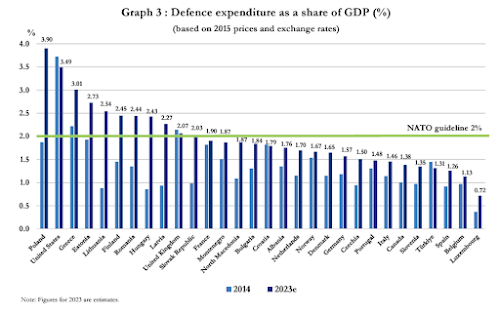
Allies or Freeloaders?

In 2006 NATO mandated its members to spend 2% of their GDP on military defense. As of 2023, only 10 of the 32 countries were hitting this target. Without any enforcement mechanism, this is an example of the free rider problem. 

The mandated spending program exists to share the burden of protection amongst all members of NATO, making them stronger as a collective. Although all countries are required to spend 2%, this does not mean the same amount is contributed by each member. The United States is projected to spend 3.38% of its GDP in 2024 compared to Poland’s 4.12%, however, the U.S.’s contributions account for two-thirds of NATO’s overall military spending. Other countries have an incentive to free ride off of the contributions of these big spenders without contributing their share, secure in the expectation of aid. Instead of pushing to reach their 2% minimum, they drag their feet, slowly increasing over years. Following Summer 2024, 23 countries are expected to reach the required spending, a massive increase in one year. This suggests two things: first, they were capable of reaching the spending floor the entire time and, second, there is a threat incentivizing them to increase individual military spending. The first reinforces the notion that this has been a problem of free riding for 18 years and the second is a sign of a potential war. 


Thursday, September 12, 2024

Club Running: A Public Good?

The Running Club at UVA is up there as one of the most disliked clubs around grounds. We are the weirdos who live for the pain, jogging mile after mile in tank tops and short shorts. But, as a Club Running Economist, I was wondering: can the club be considered a public good? To be considered a pure public good, it must be both non-rival and non-excludable. For the purposes of this discussion, I will consider Club Running to be non-excludable, as it is in our Constitution that anyone can join us. By technicality, we could prevent someone from running with us, but to me that would be like forcing someone out of a public park.

The real question comes with non-rivalry. When more people run with us, does the utility of my run increase or decrease? Certainly, there are many social benefits involved with running as a group, such as group motivation and improved performance through competition. However, when the group size gets too large, I start to worry about tripping over someone else's legs, and it can be overwhelming to run with so many people you don't know. Thus, as n = 1 runners in the group begins to increase, initially my utility also increases (non-rivalry), however, as n continues to rise, my utility starts to decrease as I worry about falling. This ultimately means that with large groups, I enjoy my runs less. Because of this, it seems although at some points there is non-rivalry, I cannot consider Club Running to be a pure public good.


Wednesday, September 11, 2024

The Public Good of Success

            As a member of the baseball team at UVA over the past two years, I’ve been fortunate to be a part of two very successful seasons. While not very easily quantified, the success of our team in its most basic sense can be viewed as a public good— each individual member adds different production to the team, amounting in some level of success throughout the season which everyone can benefit from. Although it is not quite pure since members can receive more or less benefit depending on how they contribute, everyone receives some level of benefit at the end of the season.

My two years as a member of this team provide a good example of how the team’s success is a public good. Our team reached the College World Series in each of the last two years, which provides a nice control for the public good (our overall team success). In my first year I contributed greatly on the field, but last year I missed around ¾ of the season with an injury. Even though my contributions varied greatly, in both years I got to benefit from being a member of a championship team.


While technically Gruberch would consider me a free rider last year by circumstance, our team can generally mitigate the deliberate free rider problem. Gruberch mentions in chapter 7 how in more trusting communities, the free rider problem occurs less. Immense trust in each other is one of the core foundations instilled in our team culture, which is likely a large reason why free riders are uncommon within our community.

Sign posted around the baseball stadium,
shows commitment and trust in our team community

Above the Clouds, Beneath the Trash: Everest's Waste Problem

After visiting a climbing gym with friends this summer, I briefly entertained the idea that I might someday summit Everest. Although my initial optimism has since waned, I afterward went down a rabbit hole of Moutain Everest documentaries. Each documentary posed an almost insurmountable problem: the accumulating waste on Everest. 

Beyond Camps Three and Four, climbers face steeper terrain, increased physical exertion, and the need to rely on oxygen tanks. Unfortunately, many climbers shed their used gear once it's no longer needed, leaving thousands of empty oxygen canisters, tents, and waste on the once-pristine slopes. For individual climbers, it’s beneficial to discard used gear to lighten their descent. However, this practice diminishes the experience for others by contributing to the significant litter problem on Everest. The complexity of cleanup is further compounded by the fact that only experienced climbers can perform such tasks, and each climber is limited to carrying an additional 25–30 pounds.

What's the solution? The Nepalese government plans to impose an additional $4,000 fee per climber, raising the cost of a foreign permit to nearly $15,000, and limiting the number of climbers each season. In a sense, Nepal is creating a market for climbers (litterers) and placing an extra tax on them to combat the peak's desecration. While this policy may aid future cleanup efforts, the current solution still relies heavily on the goodwill of climbers to protect the mountain from becoming an even larger landfill.

Tuesday, September 10, 2024

Cops and Donuts

 During the Gruber reading he talks about externalities focusing on the polluted streams example though he makes reference to others. One in particular that I found interesting was the example of the donut shop and the neighborhood. In this example the  cost of police protection wasn’t factored in donut cost. I found it interesting because I’ve heard that reference before but didn’t know the origin so I decided to look further into it. 


The cops and donuts stereotype began in the 40s. Donut shops were the only stores open all night so policemen would often eat there. Since donut shops were the only ones open late this made them susceptible to theft and other crimes. This made for a symbiotic relationship as security was expensive and policemen were able to enjoy a quick snack. However this is also an example of a positive consumer externality because the policemen provided protection without receiving any added benefits.

Sunday, September 08, 2024

The Battle of the Courts

While walking, a friend and avid pickleball player shared she had “used tennis courts when pickleball courts were full but felt bad about it. They hate that.”

This didn’t sit well with my inner economist. Tennis courts are accessible to all UVA students; why can’t they be used in whatever way maximizes students' utility? If pickleball courts are overpopulated and tennis ones are not, the market is demanding more pickleball than tennis. Why is moral wrongdoing placed on pickleball players?


To approach this situation from a Coasian perspective, I considered property rights. According to social norms, pickleball courts belong to pickleball players and tennis courts belong to tennis players. UVA’s online court booking system helps assume low transaction costs.


The irreciprocal nature of court usage–tennis courts can be used for pickleball but pickleball courts are too short for tennis–means pickleball players always impose on tennis players’ property rights. In order to most efficiently use university resources, pickleball players could pay damages to tennis players for their repurposed court time slots. From a practical perspective, however, delineating people who were genuinely planning on playing tennis from those booking online slots just to resell them would be challenging.


Government Monopoly On Grounds

In the reading Role of Government in a Free Society, Milton Friedman argues that natural monopolies are a threat to strictly voluntary exchange. One of the possible, although not preferred by Friedman, solutions is a public monopoly: the government itself takes over the private firm and manages its business activities. 

In our class discussion about examples of public monopolies, I was reminded of a global sustainability class where I learned that the city of Charlottesville owns the gas utility that services the area. Charlottesville Gas is a municipality-owned natural gas utility and a prime example of a public monopoly. The high entry costs of laying down additional natural gas pipes to both new and existing infrastructure constitute some of the barriers that discouraged other competing firms from entering the market and thus created the conditions of a natural monopoly that the city decided was best addressed through government ownership. The city controls manages pipe construction and gas prices while residents pay their gas bill directly to the city. Fun fact: if you are constructing a new building in Charlottesville, the city will build natural gas piping that connects to the new building for FREE.

Border Burden in Texas

The influx of immigrants crossing the US-Mexico border raises significant economic concerns, particularly related to the free-rider problem. Public goods such as healthcare and education are generally funded by taxpayer dollars. Public goods are characterized by their non-excludability, meaning that regardless of how much one group contributes to their funding, the goods are available to everyone. This trait in particular can lead to the free-rider problem, especially for border states like Texas. According to Debusmann, thousands of immigrants pour into the US daily, and they are crossing and staying without paying taxes. 

Under the Biden administration, Texas has been ordered to provide accommodation for the immigrants regardless of their immigration status as Biden strives to hold to the United State’s original anthem of being a harbor for refugees. However, this has been a point of contention in the political sphere even resulting in legal battles between the state of Texas and the federal government. This free-rider scenario has resulted in a negative ripple effect on much of the nation lining the border. As of August 9th, Texas Governor Greg Abbott mandated that hospitals collect the immigration status of patients starting November 1, 2024 to “hold the Biden administration ‘accountable’ for its ‘costly and dangerous’ border policies”. In this mandate, Governor Abbott explains that, “Texans should not have to shoulder the burden of financially supporting medical care for illegal immigrants.” This mandate attempts to address the free-rider problem at the southern border: Texans are paying taxes to fund public goods, yet these immigrants are using these goods without paying taxes themselves. This increasing number of immigrants is inadvertently putting strain on the quality and availability of these public resources for everyone else in Texas as a result.

No love: Lead is in the air

I grew up in Eagan, Minnesota, a suburb of Minneapolis. Each morning on my way to school, my skyline consisted not of the Foshay Tower and U.S. Bank Stadium (highlights of Minneapolis), but rather the billowing smokestacks of Eagan’s Gopher Resource recycling plant. My elementary and middle school was less than a mile from the plant, and I often wondered what exactly was spewing out of those chimneys. 

(This is the plant's good side)

While caught in a doom scroll on Instagram last week, I came across an ad for a class-action lawsuit against Gopher Resource in Eagan. The settlement payout includes those who “lived within, attended a school within or worked within one mile of the stack of the Eagan Facility from January 1, 2000 to July 24, 2024”. I went 3/3. The settlement claims that the facility exposed me and my neighbors to “lead, cadmium, arsenic, sulfur dioxide” and other chemicals that I would rather not inhale. My exposure to these chemicals is a negative production externality; because this plant polluted the environment, I suffer the consequences. 

A father whose child attended school near a different Gopher Resource plant in Florida originally filed suit. In making this decision, he opted against a Coasian resolution to this problem, settling instead for collective action and state intervention. While Coase would say this is outside of the government’s intended role, I’ll certainly enjoy the extra cash in my wallet.


Friday, September 06, 2024

Free riding is rubbish

 Last year I lived on Rugby Road and would walk down Chancellor Street to get to the corner. I remember at the beginning of last year that my journey became more and more unpleasant due to an ever accumulating pile of trash and boxes on the sidewalk of Chancellor Street. After a couple weeks it got so bad that the boxes blocked the entire sidewalk and I was forced to increase the riskiness of my trek by venturing into the street just to get around this mess. As a third party who did not live on Chancellor Street, a negative externality was being imposed on me. How rude, I thought to myself–the residents leaving their boxes on the sidewalk are only considering their marginal private cost (and MPB), not the higher marginal social cost of them producing this trash. I suppose I could’ve offered them a Coasian solution such as paying them to remove their boxes, but magically one day they disappeared and I never thought about it again…


…until now. The tables have turned and I am now a resident of Chancellor Street. I now see that trash is a fee based service. Even though we pay, for some reason Charlottesville doesn’t collect our large boxes and they have now accumulated to a sidewalk-blocking level. Now that I am no longer a third party, I have a bit more insight into why this problem persists. The trash bins are shared between six different units. Hence, we have a free rider problem. There are many of us who could remove this trash ourselves or call the trash service and get it sorted out, but we all hope someone else will take this cost on. All residents of the six units will get the benefit of a cleaner sidewalk regardless of who bites the bullet and cleans it up, so alas we are in a stalemate of wills.


Tuesday, September 03, 2024

Free Markets and Small Government: The Cure to the Healthcare Crisis

Though government schemes such as Medicare exist, the healthcare system in the U.S. is mostly privatized, using markets to distribute healthcare resources according to individual demand. However, many problems persist, including an effective monopoly in the pharmaceutical industry, primarily due to poor execution of patent laws and firms lobbying a government which holds far too much power to interfere in markets, which, much of the time, fare better if left to their own devices. 

Conversely, suggesting in an assembly of a European government that markets should be utilized to distribute healthcare would be political suicide. Policy in these settings is dictated by the belief that healthcare is a human right, making any proposal for market-based solutions appear morally suspect. Even American proponents of a single-payer system seldom focus on efficiency, instead opting to frame any opponents to their ideals as driven solely by “profit” - a buzzword often used to discredit market systems. I propose that a market solution could distribute healthcare more efficiently than a government service such as the NHS. If predatory monopolies can be addressed, markets could reach an efficient allocation of healthcare resources, which is unlikely under government control, as that would necessarily lead to a public monopoly, or a monopoly propped up by government regulation and assistance, which, according to Milton Friedman, is far from desirable. Thus, the most moral and efficient way to distribute healthcare is through a market system and the notion that economists are committing a moral evil by opposing government monopolies of healthcare is unfounded.

Sunday, September 01, 2024

The Genomic Gold Rush

My biology class on DNA was just visited by Eric Green, the director of the National Human Genome Research Institute and a significant participant in the Human Genome Project (HGP).

Originally a $2.7 billion dollar project approved by Congress and funded by the NIH, the HGP focused on sequencing the human genome in its entirety. Unlike USPS’s monopoly on US letter delivery, this government-funded endeavor was not legally protected as a monopoly. A race to be the first to completely sequence the human genome ensued between the HGP and the private company Celera.


The HGP presents an interesting overlay of several concepts discussed in class; the extraordinary start-up costs required for early sequencing efforts (namely the equipment and specialized labor) means it exhibited some characteristics of an economy of scale, but not so much as to wholly prevent competition. The HGP involved government action opposed by some congressmen, introducing Friedman's "strain" to society. The HGP is now widely regarded as a positive externality, benefiting humanity by aiding in the development of medical advancements such as gene therapies, custom medications, and earlier disease diagnoses. Although the "race" ended in a tie, by competing with Celera and providing publicly accessible data, the HGP prevented monetization of the human genome through Celera’s planned subscription service.