Wednesday, September 25, 2019

Redistributing Everything but the Beer


Carson King, a 24-year-old Iowa State fan, prepared his sign for ESPN’s“College GameDay.” It read, “Busch Light Supply Needs Replenished” followed by his Venmo handle. Carson didn’t expect much. “College GameDay” boasts hundreds of clever, grammatically-correct, well-designed signs each week, so why would his sign – a simple black-Sharpie-on-a-white-background piece – go viral? Carson fully expected himself to end up in the poor class with income Y1. After all, the odds that your sign is spotted in the crowd and people actually overcome the bystander affect to send a random stranger money for beer must be pretty low. This result depends on so many variables outside of his control, and he anticipated π1 to be greater than π2.

One week later, Carson received a grand total of about $270,000. That’s a pretty good haul for a week, and I would say – for the week at least – Carson found himself in the rich class with income more like Y2.

Carson’s poster experiment represents a small-scale, real-world scenario of the equation we looked at in class. Before arriving at “GameDay,” Carson had no idea of whether his poster would bring him any money at all. He didn’t expect hundreds of thousands of dollars, and any small event could’ve changed the outcome. Traffic could’ve made him late to the show, or he could’ve broken his arm, preventing him from hoisting his glorious sign. Carson accepted that he could end up either in the rich or poor class and tried anyways.

His B value was pretty high as well. Instead of keeping the money to pay for his education, rent, or an Iron Throne made of Busch Light, he kept about $15 in order to buy exactly one case of beer as promised. The rest of the roughly $269,985 is getting matched by Venmo and Busch and donated to the University of Iowa Stead Family Children’s Hospital. Carson clearly values redistribution. Count him as a “yes” towards the class’ redistribution-policy vote.

Voting for Dinner

It would be great if there was a local restaurant named "I Don't Care" or "What Do You Want?" because these phrases are the most popular answer when it comes to asking my family what we should do for dinner. There is no dictatorial vote among my parents, my brothers, and myself, so we use a pure democracy to choose where to eat. Yet, when it comes time to deliberate and vote, many of my family members seem disinterested in participating. Only when the decision has been made do they speak up–by complaining. "We had that last week!" "But I don't like Italian!" Clearly, my family has differing utilities according to restaurant based on their preferences, otherwise they would not complain and we could pick randomly. Considering this, are they rational to not vote?

If the expected marginal benefit of casting their vote on dinner exceeds the marginal cost of doing so, it seems they would vote every time. With only six voters, the expected marginal benefit is likely sizable, since the probability that one vote matters is not negligible like it would be in a political race. Thus, the problem must be that there is a significant cost to voting for them to be rationally abstaining. I believe the cost they face comes from the fact that we vote vocally, so each person has to suffer the chore of defending their preference, entertaining complaints, and being "responsible" if the food or service is subpar. Each abstaining voter would rather let the vote play among those who choose to participate, then attempt to sway the decision in a non-democratic manner, either by persuasion or complaining.

I would prefer if every single family member voted, so everyone's preferences would be expressed and the non-democratic cycle of whining would end. To solve this dilemma, I can propose two solutions. First, we can add a non-probabilistic benefit to voting. I suggest that each person who votes can have dessert at the restaurant. Second, we can minimize the cost to voting by formalizing the vote with a secret ballot. Personally, I think there is some value to the vocal vote, because it gets my family to discuss the options. Therefore, the first solution takes the cake.

Professor Elzinga Conspiracy Theories


            One of my housemates writes for The Cavalier Daily. The other night, following an editorial meeting, Bridget came home in a fit of rage about a proposed story idea. Nearly the entire meeting was dedicated to a discussion about Professor Elzinga always scheduling a midterm on Election Day. Conspiracy theories were being thrown out left and right about Elzinga’s motivation behind this scheduling regularity, everything from the day falling in the tenth week of class to Elzinga purposefully attempting to keep students from the polls (disclaimer: I have no idea if Professor Elzinga even schedules exams on Election Day each year, but if he does, I definitely do not buy into these theories).
            Let’s take it as fact, for the purposes of this post, that Professor Elzinga does schedule a midterm each first Tuesday of November. This means that, more likely than not, students taking ECON 2010 will have a higher marginal cost of voting than many of their peers who are not taking Professor Elzinga’s class. The increased marginal cost is attributed to any number of things that affect students on the day of a midterm: the study time lost if a student chooses to go vote, a lack of concentration on the upcoming test, and potential for unforeseen conflict if a student breaks their typical midterm preparation ritual. The only way that an ECON 2010 student’s marginal cost of voting would not increase in this situation is if they are fully invested in the idea of Dutch Knockout and are banking on the final.  
            Therefore, if we take Professor Coppock’s example of a $20 marginal cost of voting to be the standard for UVA students, a UVA student taking ECON 2010 will have MC > $20 come Election Day. In a situation such as this, the “something” that would make voting rational, D, of a student taking ECON 2010 would have to be greater than the D of a fellow UVA student not enrolled in ECON 2010, ceteris paribus, in order to justify going to vote.
            I told Bridget, after hearing this story, to report back to her editorial team that one conspiracy theory, for sure, can be thrown out the window. An economist like Professor Elzinga knows full well that the probability of one of his students’ votes being decisive in an election is a number so small that we can call it zero—therefore, scheduling an exam to keep his students from the polls cannot be the explanation.

Tuesday, September 24, 2019

Andy Samberg, economist extraordinaire

In January 2013, a group of performers-turned-economists known as "The Lonely Island" released a hit single called "YOLO", in which they emphasize the importance of living a life that is consistent with minimax regret theory. For this group, the term YOLO is an acronym, which means "you oughta look out". They give sage advice to our nation's youth, warning them that they "should never trust a bank, they've been known to fail / and never travel by car or bus, boat or by rail". This flies in the face of the careless ideology that has penetrated popular culture, which suggests that one should consider probabilities when assessing potential risks. But perhaps their most profound insight is that one should "wear titanium suits in case pianos fall on you". Looking at the table below, we can clearly see that they are correct in this assessment, according to minimax regret. The potential cost of not wearing a titanium suit would be instant death, and the potential cost of wearing one is simply needing to buy the suit (and maybe a little bit of discomfort while wearing it). Clearly, this is an easy calculation: avoid death, and wear a titanium suit at all times. And based on the fact that the music video has nearly 90 million views on YouTube, it appears that their impeccable logic is taking the nation by storm. Thanks to The Lonely Island and their lead singer Andy Samberg, we can expect the rate of piano-related deaths to plummet.


Piano falls on you
Piano doesn’t fall on you
Wore a titanium suit
0
Cost of the suit
Didn’t wear a titanium suit
Instant death
0

Mitigation Banking: A Cosian Solution?

For two summers, I interned at a startup mitigation banking firm.  This fall, I've been asked about mitigation banking in a few interviews, and I have found that it is a relatively unknown industry that is difficult to explain in a one minute response.  Luckily, this class has provided framework to make explaining mitigation banking easier.  Mitigation banking is a semi-Coasian solution to a negative production externality.  Consider the planned expansion of a rock quarry near the Atlanta airport.  In “producing” the new rock quarry, the quarry owner will irrevocably damage a wetland area.  Because wetlands act as natural water "filters," the destruction of the wetlands deteriorates water quality in the surrounding area, negatively effecting the fish population and thus the fishermen in the community. Other community members who derive utility from good water quality in the area also experience the negative externality.  The Clean Water Act makes the quarry owner liable for these negative externalities.

The exchange of mitigation credits makes mitigation banking is a semi-Cosian solution to this externality. A mitigation banker can restore a previously destroyed wetland in the same county as the expanding rock quarry, creating mitigation credits. The quarry owner can then purchase these credits to compensate for the negative externality.  The result is a zero-net loss of wetlands.  If the marginal benefit of the expansion to quarry owner exceeds the marginal cost, which includes the cost of the mitigation credits, then he will expand the quarry.  If not, the quarry owner will not pursue the expansion.

This is not a totally Cosian solution because the transactions costs are high.  Furthermore, government regulation is necessary for the creation and exchange of mitigation credits, but it could be argued that the regulation just acts to clearly define property rights.  Regardless, I think mitigation banking is an interesting industry that has been created to deal with with negative environmental externalities.

Monday, September 23, 2019

Negative Consumption Externalities with Movies


This past Sunday night, like most Sunday nights, my roommates and I like to watch a movie after everyone is back from libraries, or whatever other commitments they have. Usually we watch a movie that none of us has seen, but every now and then we watch a movie that someone has—that is what happened this past Sunday. 
Usually, this isn’t a problem, but this time, whether others watching noticed the economic relevance or not, one of my roommates proposed a strong negative consumption externality. Having seen the movie before, he would quote lines as they were being said and alerted the room when something important or funny was about happen. His interruptions were distracting and took away from my experience as well as other's, I'm sure. 
In taking Public Choice, I knew I could offer him something of value to internalize this externality. However, living with him meant that the transaction costs were not zero and my offer might cause tension or animosity between us. Unfortunately, the high transaction costs in this situation made a Coasian solution not an ideal one for me, and I decided to bear the costs myself.  
I thought about what movie theaters do to prevent these negative consumption externalities. Just like my experience, they do not rely on Coasian solutions to internalize externalities. Instead, they use the equivalent of government intervention to enforce rules that try to inhibit any externalities at all. 

Facebook's Social Pressure


When I logged on to Facebook on Saturday, this banner sat at the top of my news feed. I immediately began to feel sorry for Facebook. Does the company really not know that it’s irrational to vote since the probability of a single vote being decisive in such a large country is practically equal to zero?

Well, regardless of whether or not Facebook knows voting is rationally unjustified, the company does realize that social pressures can serve as a powerful incentive to vote. Like Professor Coppock, who votes simply to please his mom (and to avoid her displeasure), Facebook users may choose to vote simply so they can publicize this information to their friends, thereby evading the shame of not voting. 

After all, nearly 8 million people around the world have shared on Facebook that they’re registered to vote. What does it say about me as a citizen of this country if I don’t also register to vote? 

When Your Vote Actually Matters

When talking about voting, one of the reasons economists believe people won't vote is because of the minuscule odds that your vote will influence the outcome of the election. In November of 2017, voters in Virginia House District 94 (Newport News) had an election in which a single vote could have decided the outcome of the election. After many recounts, the two candidates Shelly Simonds (D) and David Yancey (R) were tied at 11,607 votes each. Because of Virginia law, the winner of this election was determined by drawing lots; David Yancey's name was drawn. Not only did this decide the representative from District 94, but it also decided who held a majority in the Virginia State House. With that win, Republicans held a 51-49 majority.

This November, Virginians will (maybe) go to the polls as all of the commonwealth's representatives and senators are up for reelection. This past election will probably encourage more people to out to the polls and vote this year. This year there will probably be more voters as people will reevaluate their E[MB]. People will not multiply E[MB] by 1/v as they will look back and remember this instance when one vote did matter; this is because of recency bias as people will remember this and might expect it to happen again. E[MB] will also increase because the differential outcome will be greater as the election of one representative might determine who has a majority in the legislature. Controlling a chamber of the legislature brings with it many benefits such as being able to set the agenda and chairing committees.

Thursday, September 19, 2019

Coasian solution to parking externalities

Below is a diagram of the parking situation at my house. Eight parking spots and seven cars to fill them. Spots A, B, and C are the least desirable due to the possibility of being parked in. Spots D, E, and F are solid, but if you're parking in one of the A, B, and C cars you may be called on to move your car. Spots G and H are the best - neither being parked in nor parking anyone else in. No spots are assigned - first come, first park.


A doable situation, EXCEPT for the fact that one of my housemates who we'll call John has a stick shift car, which imposes a large negative externality on the house. No one else knows how to drive stick shift, so whenever John's car is parked in D, E, or F and John isn't home, one of the cars from A, B, or C is stuck. At the beginning of the year this inconvenienced all of the other drivers of the house at different times. Eventually the other 6 drivers of the house all decided to give John a permanent spot in either G or H. This costs the rest of the house by confining them to generally worse spots. I, for one, have not parked in G or H since making the decision to leave John a spot. However, by exchanging my right to park in G or H more for the right to not be parked in by an immovable car, I (and the rest of the house) am left better off. The market of our kitchen table conversation enabled a mutually beneficial exchange where the externality was mitigated. We judged the amount of parking utility we were losing by being parked in by John greater than the lost utility of one of the best spots in the house. This solution was not mandated by a rental company, and John gets to keep his car.

The Positive Externalities of Running with Pres. Jim Ryan (plus free Bodos)

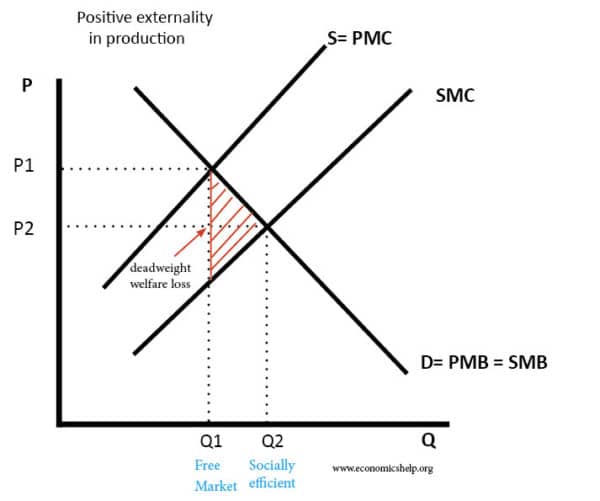
Story time, so earlier today I decided to get up out of bed at 6:15 a.m. Why would I do this given I mostly stay up until midnight on weeknights? (I promise I am usually studying) Well, it turned out President Jim Ryan (who definitely did not steal Professor Coppock's idea) was hosting one of his morning runs at Madison Hall with the CIO #HoosGotYourBack at 7 a.m. Though at first my grogginess from awaking so early appeared to, in economic terms, reduce my utility, the free Bodo's, free coffee, and a free #HoosGotYourBack t-shirt made it all worth it, at least for me. After getting back to my apartment, I noticed that there was a positive production externality deriving from the free goods I consumed. However, one of the most important foundational lessons in economics as a discipline is that nothing is technically "free" given the scarcity of materials and factors of production. Even though I did not have to pay anything for the "free" coffee, bagels, and t-shirt, I still derived utility from my consumption. This a good example of a positive production externality assuming everyone else there also derived utility from the goods provided at no cost to the final consumers (and also the releasing of endorphins from running).

positive-externality-in-production
Source
The result of this is a dead weight loss and an increase in consumer surplus since I and most likely all the other attendees would have been willing to pay more than $0 for the goods provided. However, even though a "positive production externality" has a positive ring to it, as mentioned before there is a dead weight loss the producer bears. In order to internalize this, there must be some kind of subsidy in order to move the allocation of goods from Q1 in the graph above to Q2, which would be the allocatively efficient outcome (Q_AE). This situation implies an underproduction of the Bodo's and t-shirts provided. Internalizing the costs through subsidies would help bring the total quantity produced back to the socially efficient quantity of production.

Wednesday, September 18, 2019

Fraternity Chapter Attendance

In addition to the extensive "community service" and "academic assistance" that Greek life definitely provides, one of the primary benefits of being in a fraternity is the ease of access to parties. In a sense, these events are a public good to fraternity members; they are non-rival, as the attendance of one brother doesn't affect another's ability to attend, and they are non-excludable, as brothers cannot really be kept from attending, given that members either live in the house in which they are thrown or know the door code needed to enter.

Unfortunately, like many public goods, these parties suffer from a free-rider problem. This is because people are reluctant to help plan them, since they can still receive social benefits as long as others in the fraternity pay the cost of doing so. In this case, the cost of producing parties is attending weekly chapter, as these meetings are the main forum through which event planning takes place. Because each individual's dominant strategy is to skip chapter (as demonstrated by the payoff matrix below), a sub-optimal number of people show up, which leads to an under-provision of parties.
According to Mueller, small groups can move from a Pareto inefficient outcome (the highlighted quadrant in this matrix) to a Pareto efficient one (the top left box) through the use of social pressure to encourage cooperation. This, however, has been unsuccessful for my fraternity, as people are hesitant to exclude or shame their best friends for their simple absence at weekly meetings. In order to overcome this failure, we are instead going to establish a formal sanction system in which people who miss chapter are required to clean up after parties. I hope that this improves attendance, but I also worry, as Mueller would, that this intervention might harm individuals' intrinsic motivation to contribute to the fraternity. For example, people who don't want to clean may just start skipping even more chapters and become even more distant from the fraternity. Over time, they may stop caring if we throw parties and may not feel guilty about leaving behind a dirty house (so much for brotherhood!).

I "negotiated" with a leasing company today

Here's the scoop:

In the face of a recession, my leasing company X has shared their preference to gouge students on apartment leases in the 2020-2021 contract season. My building specifically, is no gem. If I had to compare the likeness of my apartment complex to another spot on Grounds, it would be pre-renovated Clem 1. But amidst a landlord attempting to create a stream of revenue larger than that of an apartment that comes with a rooftop pool, airpods, and a pool table (in the apartment of course), he did offer an additional parking space on the lease. My inner economist screamed side-hustle. I could rent out my additional parking pass to make supplementary income. Though I may not have considered this an optimal trade at first, I soon realized an opportunity to conduct a parking service that would offset the increase in my rent.

The goal:  Sell the use of a parking spot to sketchy individuals on a daily basis to limit my personal losses on the higher cost of rent. Acquire a clientele basis that significantly drives up the social cost of my business, by royally upsetting my neighbors. Maybe these people tune up their muscle car at 3am, or maybe they have a drum circle that forms around their car. Ideally the consumer's presence should be so aggravating that people in the building don't want to live here anymore and seek further action.  As long as the consumer of the parking spot bothers my neighbors, I will profit from an intentionally formed negative externality. (There is the chance that I would also be negatively impacted by their behavior but I assume that I am not, for the sake of keeping this brief.) If this negative externality gains the attention I intend, X will take action due to complaints from my neighbors. It is quite possible they could find a state ordinance against treating students as first class citizens, but with Coase solutions on my mind I really am banking on the fact that they would be willing to reach an agreement. As one of their residents, if I were evicted or sued in court, I could wreck their yelp reviews. I imagine a Coasian solution to this problem could be X offering to lower my rent, in order for me to end my business practice, which terrorizes my neighbors. They could go further, and begin putting a clause in their leasing agreements that ban side-hustles from taking place in the complex, or a fee that detracts businessmen from operating out of their building.

Sure, it would be less of a hassle for me if I were just given a lower lease price and the leasing company could keep an extra parking spot to sell to another resident who needs it, but if I am given an extra parking spot, you can bet that the hedonist within me is willing to sacrifice the happiness of my neighbors, to minimize the increase in rent by renting out my additional parking spot.

On a sadder note, the landlord just called and is willing to shave $100/month off the lease for that parking spot. As he just internalized the uncertainty I would face in a new business venture by keeping the investment and offering money instead, I am prone to take the side bargain over my business venture. Who would have thought that blackmail encouraged a side bargain.


Tuesday, September 17, 2019

Poetry is Not a Public Good

While I’ve been preparing for Flux’s next open mic (this Thursday at 8 pm in Brooks hall!!), I’ve been thinking about how poetry is not actually a public good. It’s usually nonrivalrous, as my enjoyment of a poem about tide to-go sticks does not in anyway limit your enjoyment of the same metaphor. However, any good open mic is excludable. This was best seen at the College Union Slam Invitational 2017, when the “founder of slam poetry” Marc Smith was booed off a stage for his performance of a particularly tasteless poem, Old White Guy Whitey. 
Unlike other more traditional poetry venues, property rights are clearly defined in an open mic space: they belong to the audience. At Flux events, the executive board acts as a governing body in that we let the audience know at the beginning of every event that they are not required to tolerate any sort of hate speech. In this scenario, the CUPSI crowd did not attempt to achieve a Coasian solution to this negative externality. Instead, after Smith was kicked off the stage, the audience proceeded to also demand a new host. The remaining competing teams then required that the rest of the competition would not be filmed, which only furthered to increase the excludability, as those (like myself) watching online from home were unable to see any of the poems that made it to the final stage that year.

Monday, September 16, 2019

To Busk or Not to Busk

When I was a second year at UVA, I was part of a trombone quartet called "The Rolling Bones." Like many casual musical groups composed of college students, we were looking to share our craft and make a quick buck at the same time. As a result, we grabbed our trombones and took to the downtown mall to busk our setlist of movie music and rock covers. 

After a fun afternoon of sharing our music with Charlottesville residents and making some tip money, we wondered (maybe not in these exact words) whether our profit-maximizing output (q*) was below the allocatively efficient output (qAE) where the social marginal benefit of our performance intersected the marginal cost of preparing and performing the music. 


In economic terms, our musical performance was a public good, because it fulfills the two criteria that distinguish public goods from private goods. First, our performance is non-rivalrous in consumption. Any downtown mall-goer that listens to our music does not impact the consumption of anybody else within earshot. Second, our product is non-excludable. We have no way to stop non-paying consumers from hearing our music: we have neither the property rights nor the resources to restrict entrance into our portion of the downtown mall. As a result, many people acted as free riders, not contributing any money yet still receiving our product. 

Although our trombone quartet performance is a public good, there are certain factors in the private market that bring our profit-maximizing output closer to the allocatively efficient output, according to Gruber’s theory of public goods. While some mall-goers seemed to enjoy our zany takes on Green Day and Disney soundtracks, others rolled their eyes at four dorky college students playing large brass instruments during their lunch hour. Although the benefits of our performance are shared by all in earshot, the utility gained by our performance varies among individuals. People that particularly enjoy trombone quartets recognized this, and were therefore likely to leave a larger than average tip, pushing our revenue closer to that at the allocatively efficient output. 

When you include the utility gained by enjoying the downtown mall on a beautiful afternoon, as well as some post-busking gelato, it was a successful busking outing for “The Rolling Bones.”

Sunday, September 15, 2019

Noise Free-Riding in Quiet Study Spaces

Listen, I enjoy having a quiet place to study as much as the next guy. That is why I study in the government documents room ("gov docs") on Alderman's Third Floor (no this is not an advertisement).  Though a seemingly perfect substitute exists in form of Clem 1, I find the slightly more casual atmosphere of "gov docs" to be more appealing (looking at you, the people who glare at others for opening a bag of chips on Clem 1). Plus, I am trying to take in all of what Alderman offers before it undergoes renovations in May. Sometimes however, the noise from other people whispering can coalesce into relatively loud talking not unlike the cacophony resulting from the people who study on Clem 2 (sorry to those who study there). How does this relate to ECON 3330 you ask? Here it is: if we assume, borrowing from Coase's confectioner and doctor example, that I were a "doctor" complaining about my inability to concentrate among the others making noise, I could theoretically reach a Coasian solution with the "confectioner" noisemakers. This would only be the case if there were solely one other person in all of "gov docs" and that person was making noise.

However, this is rarely the case, especially when "Sunday scaries" and midterm season rear their ugly heads. As a result, I am often surrounded by multiple "confectioners", thus introducing a free-rider aspect into the issue. If I were to reach a hypothetical Coasian solution with each noisemaker, then inevitably the rational noisemaker would notice that as the number of noisemakers increases the marginal cost that they would incur of making noise falls. Among 20 people in one room, one extra person making noise is relatively less disturbing than one extra person making noise among five people. Given that each noisemaker is likely rational, the free-rider problem would be exacerbated, thereby resulting in every noisemaker disturbing one's study time. Under these constraints, "gov docs" would be noisy all the time, and I would just have to resort to finding a different place to study. However, it appears that norms of empathy override this urge to de-prioritize others' studying for one's own right to make noise (even for the noisiest of people). I guess this kind of digressed into an open letter to quiet studying rooms (and norms of empathy). Well, quiet studying rooms, you're underappreciated, don't ever change. With dear thanks, a Public Choice student.